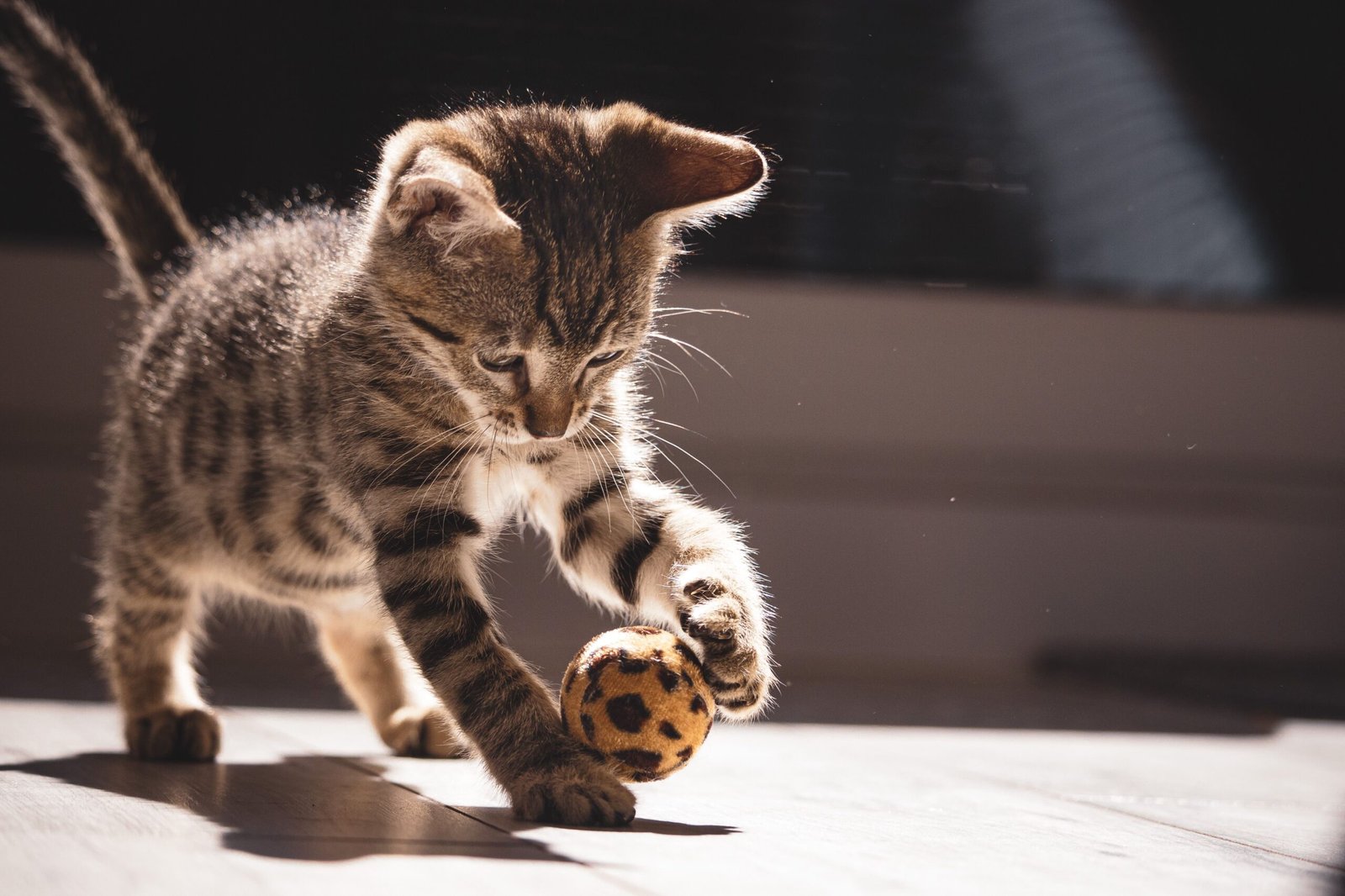
Keeping your cat entertained does not have to cost a fortune. Store-bought toys can be fun, but many cats are just as thrilled, if not more, with simple homemade options made from things already lying around the house. Here are easy, budget-friendly DIY cat toys you can make in minutes, along with safety tips and ideas for keeping play interesting.
Why DIY Cat Toys Work So Well
Cats are drawn to movement, texture, sound, and novelty rather than expensive design. A crumpled piece of paper can capture their attention just as effectively as a store-bought toy, because it rolls unpredictably and makes a satisfying crinkle. Homemade toys also let you rotate new items often, which prevents boredom. Regular play is important for exercise, mental stimulation, and bonding, and it can reduce problem behaviors such as scratching furniture or night time yowling.
1. Paper Ball Chasers
Crumple a sheet of plain paper, or a piece of paper from a clean recycled bag, into a loose ball. Toss it across the floor and watch your cat pounce. Avoid paper with ink or glue, and remove the ball when your cat starts shredding and swallowing pieces.
2. Cardboard Box Hideout
Few things delight cats like a box. Cut a few holes in a cardboard box so your cat can peek and reach through, and tape the flaps open or closed as you prefer. You can also connect several boxes with openings to make a simple tunnel maze. Remove staples and tape pieces your cat could chew off.
3. Sock Catnip Toy
Fill the toe of a clean sock with a small handful of dried catnip or crinkly material, then tie a tight knot above it. Cats love to kick, bite, and carry it around. Make sure the knot is secure and check the toy regularly, throwing it away once it is damaged or has loose threads.
4. Homemade Wand Toy
Tie a lightweight, cat-safe item such as a strip of fabric or a feather to the end of a sturdy stick or wooden dowel using a short piece of cord. Wiggle it along the floor like prey. Wand toys are great exercise, but always store them out of reach afterward, because cats can swallow strings and cords.
5. Toilet Paper Roll Puzzle
Place a few treats or kibble inside an empty toilet paper tube, and fold the ends closed. Your cat will bat the tube around to get the food out. This turns snack time into a simple puzzle and encourages natural hunting behavior. Use only a small number of treats, and count them toward your cat’s daily calories.
6. Ping Pong Ball Bathtub Game
A ping pong ball dropped into a dry bathtub or a large plastic bin makes a loud, fast-moving toy that cats find hard to resist. The smooth sides keep the ball from rolling away too far. Supervise play and put the ball away when you finish.
Safety Tips for Homemade Toys
Safety matters more than creativity. Avoid string, yarn, ribbon, rubber bands, and small parts that can be swallowed, since they can cause serious intestinal blockages. Do not use toys with glue, paint, or sharp edges. Always supervise play with any homemade toy and throw away anything that is torn or chewed apart. If your cat swallows something it should not have, contact your veterinarian right away.
How to Keep Playtime Interesting
Rotate toys every few days so they feel new again. Play in short sessions of ten to fifteen minutes, one or two times a day, and end with a small treat or meal. Move toys the way real prey would, with pauses, darts, and hiding, rather than waving them constantly. Let your cat catch the toy now and then so they feel successful.
Safety Tips for Homemade Cat Toys
DIY toys are cheap and fun, but cats can be very determined chewers. A few simple rules keep playtime safe and stop a fun toy from turning into a vet visit.
- Always supervise play with string, ribbon, wool or feather wands, and put them away afterwards — swallowed string can cause serious gut injuries.
- Avoid small parts such as bells, buttons, beads or googly eyes that can be pulled off and swallowed.
- Use non-toxic materials and avoid glue, glitter, rubber bands and plastic bags.
- Check toys regularly and throw away anything that is torn, frayed or falling apart.
- Rotate toys every few days so your cat stays interested, and try two short play sessions a day that end with a “catch” and a small treat.
Frequently Asked Questions
How often should I play with my cat? Aim for at least two short sessions per day, since active play helps keep indoor cats fit and happy.
Is catnip safe? Catnip is considered safe for most cats and is not addictive. Some cats do not react to it at all.
What if my cat ignores the toys? Try different textures, sizes, and movements, and test play at different times of day, since many cats are most active in the evening.
Final Thoughts
You do not need to spend much money to give your cat a fun, stimulating home. A few household items, a bit of creativity, and some attention to safety can keep your cat active and happy. Try a few of these ideas, see which your cat loves most, and enjoy the playtime together.
Related reading: How Often Should You Bathe a Dog · Signs Your Cat Is Stressed (and How to Help)
Helpful Resources
- International Cat Care – Play and enrichment – expert advice on keeping indoor cats active
- ASPCA – Cat care – general care and safety tips for cat owners