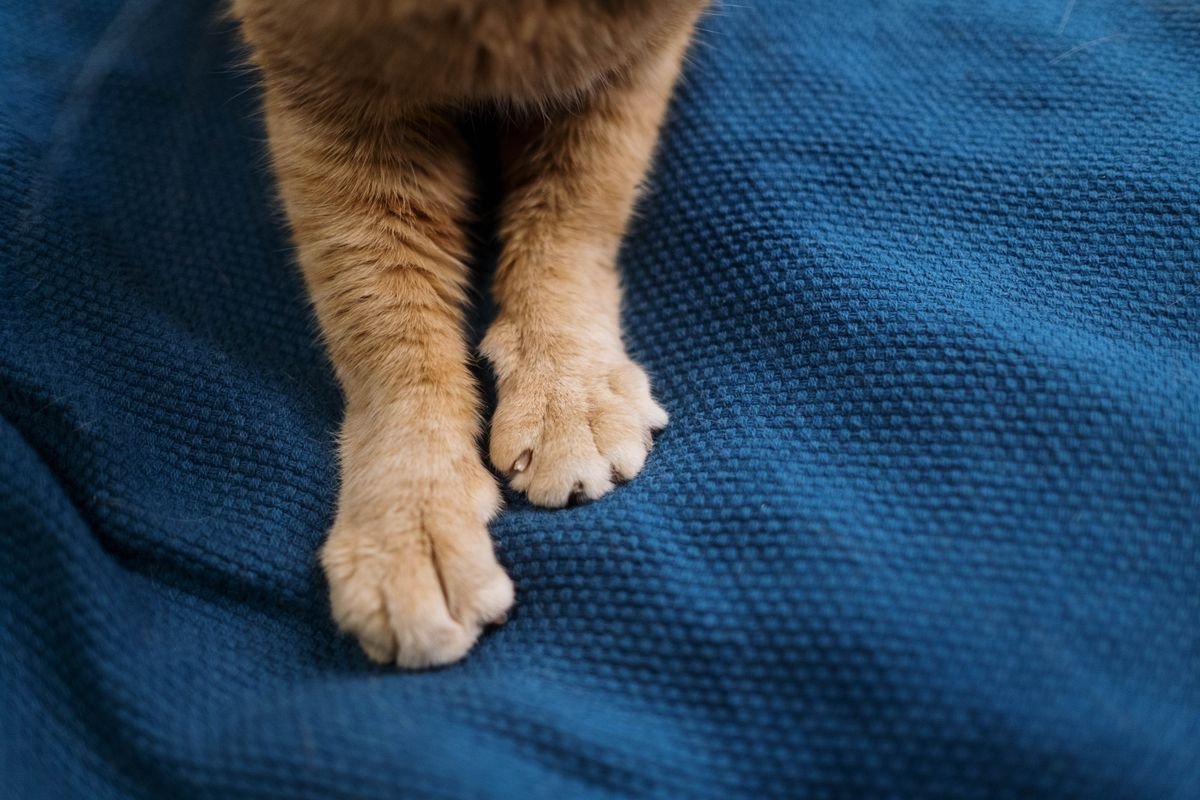
If your cat pushes their paws in and out on your lap, blanket, or favorite pillow, they are kneading. This rhythmic motion, often called making biscuits, is one of the most endearing cat behaviors. But why do cats do it, and should you ever worry? Here is what veterinarians and behavior experts understand about this habit.
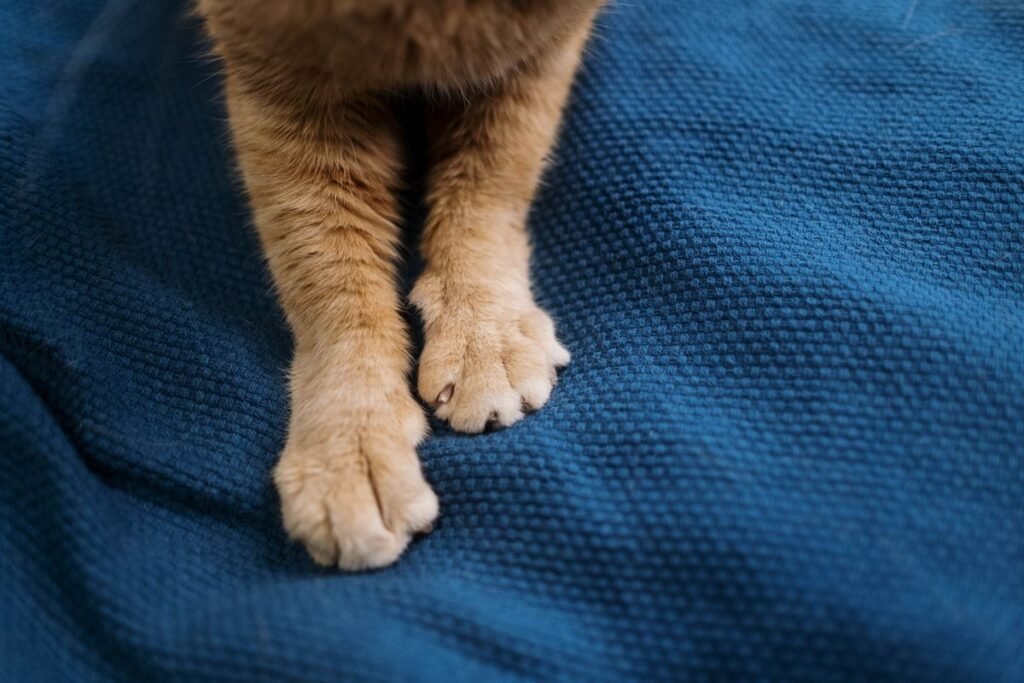
What Does Kneading Mean?
Kneading is the repeated pressing of the front paws against a soft surface, usually alternating left and right. Some cats extend their claws while they do it, while others keep them tucked in. Many cats purr, drool slightly, or half close their eyes while kneading, which suggests the behavior is tied to deep relaxation and contentment.
It Starts in Kittenhood
The most widely accepted explanation comes from nursing. Newborn kittens knead their mother’s belly to stimulate the flow of milk. The motion becomes linked with warmth, food, and safety. Many cats carry the habit into adulthood and use it whenever they feel comfortable, which is why you often see it on a soft lap or a warm blanket. Cats that were weaned early sometimes knead more often and for longer.
Other Reasons Cats Knead
Comfort is the main reason, but it is not the only one. Wild cats are thought to knead grass and leaves to make a soft sleeping spot, and your cat may be repeating that instinct on your sofa. Cats also have scent glands in their paws, so kneading leaves a personal scent on the surface, a way of saying this place is mine. Female cats may knead more when they are in heat, and some cats knead to stretch their muscles before settling down for a nap.
Why Does My Cat Knead Me?
When your cat kneads you, it is usually a sign of trust and affection. You are their safe place, just as their mother once was. If your cat chooses your lap, it means they feel secure around you. Take it as a compliment, even if it comes with a few pinpricks from sharp claws.
How to Handle Painful Kneading
Kneading can hurt when claws are out. Never punish your cat, because the behavior is natural and comes from happiness. Instead, try these simple steps:
Keep your cat’s nails trimmed regularly so the claws are less sharp. Place a thick blanket or cushion on your lap as a barrier. Gently lift your cat’s paws and place them on the blanket instead of your skin. Offer a soft cat bed or blanket as a special kneading spot. If your cat gets too rough, calmly move them off your lap and reward them when they settle down.
When Kneading May Signal a Problem
In most cases kneading is perfectly healthy. However, if your cat suddenly begins kneading compulsively, seems anxious or stressed while doing it, or starts to damage furniture and bedding, talk to your veterinarian. Excessive kneading can occasionally be linked to stress, a change in routine, or boredom. Providing more play, climbing spaces, and predictable daily routines can help reduce anxious habits.
Frequently Asked Questions
Do all cats knead? Most do, but not every cat. Some never knead, and that is also normal. Personality and early life experience both play a role.
Why does my cat drool while kneading? Drooling is often a sign of deep relaxation and links back to nursing as a kitten. It is usually harmless.
Should I stop my cat from kneading? No. It is a natural comfort behavior. Manage the claws and use a blanket instead of discouraging it.
How to Encourage or Redirect Kneading
Kneading is normal and usually a sign that your cat feels safe, so there is no need to stop it. You can simply make it more comfortable for both of you. Place a soft blanket or towel on your lap before your cat settles in, and keep your cat’s claws trimmed so kneading does not hurt.
If kneading becomes uncomfortable, gently lift your cat and place it on the blanket instead, then reward calm behavior with a treat or a gentle stroke. Avoid scolding or pushing your cat away harshly, because that can confuse a cat that is acting out of affection and may damage trust.
Some cats also suck on blankets or clothing while kneading, which is often a leftover comfort habit from kittenhood. If the behavior becomes constant or your cat seems anxious, mention it to your veterinarian.
Final Thoughts
Kneading is a sweet leftover from kittenhood and a clear sign that your cat feels safe and loved. Understanding why cats knead helps you respond with patience instead of frustration. Keep those nails trimmed, offer a soft place to knead, and enjoy this charming behavior from your favorite feline.
Related reading: How to Litter Train a Kitten Fast · Why Cats Scratch Furniture and How to Stop It