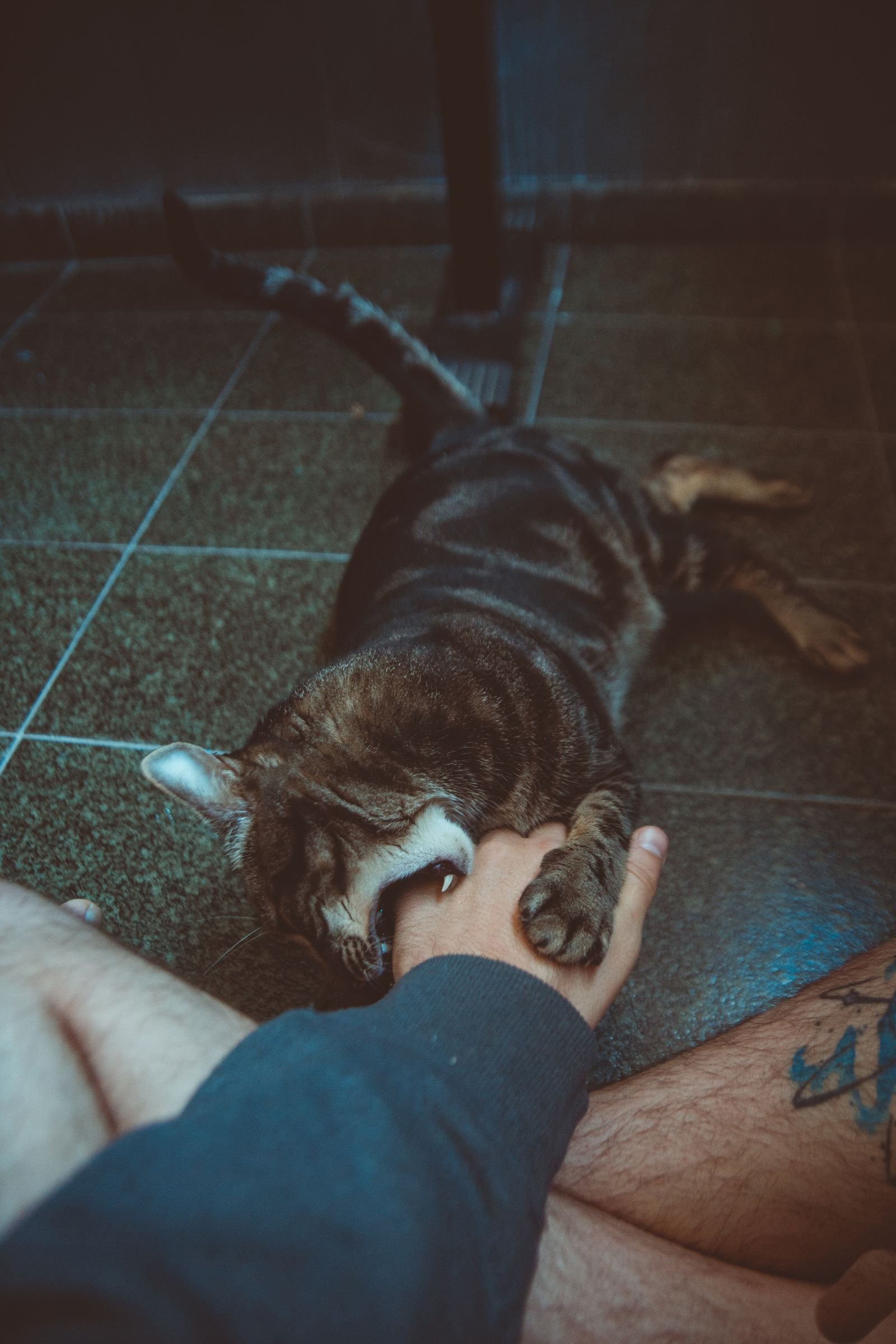
One moment your cat is purring on your lap, and the next they sink their teeth into your hand. Cat bites can be confusing and sometimes painful, but they almost always have a reason. Cats use biting to play, to communicate and to protect themselves. Once you understand why your cat bites, it becomes much easier to prevent it. This guide explains the most common causes and gentle, effective ways to stop the behaviour.
Common Reasons Cats Bite
1. Play and hunting behaviour
Cats are natural hunters. Kittens learn to stalk, pounce and bite while playing with their littermates. If a kitten was taught to play with human hands, it may keep treating fingers and toes as prey as it grows up. These bites are usually quick, often come after a pounce, and happen when your cat is excited.
2. Overstimulation (petting-induced aggression)
Many cats enjoy being stroked for a short time, then suddenly bite. This is often called petting-induced aggression. The repeated touch becomes too much, and the bite is your cat’s way of saying “stop”. Warning signs usually come first: a twitching or thumping tail, skin rippling on the back, ears turning sideways or back, and your cat turning to look at your hand.
3. Fear or stress
A frightened cat may bite to protect itself, especially if it feels trapped. Loud noises, visitors, other pets, being picked up or a trip to the vet can all trigger fear bites. These bites are usually harder and come with hissing, flattened ears and a crouched body.
4. Pain or illness
If a normally gentle cat suddenly starts biting, especially when touched in one area, pain may be the cause. Dental disease, arthritis, injuries and other health problems can make cats defensive. A vet check is important in these cases.
5. Love bites
Some cats give gentle nibbles while being petted or groomed. These “love bites” are usually soft and part of social behaviour, but they can turn into harder bites if your cat becomes overstimulated.
How to Stop Your Cat From Biting
- Never use your hands as toys. Play with wand toys, kicker toys and balls so your cat learns to hunt toys, not fingers.
- Schedule daily play sessions. Two or three 10–15 minute sessions of active play help burn off energy. End each session with a “catch” and a small treat.
- Learn your cat’s warning signs. Stop petting as soon as the tail starts to twitch or the ears turn back.
- Keep petting short. Many cats prefer gentle strokes on the head and cheeks rather than the belly or back.
- Freeze and redirect. If your cat bites during play, stay still (pulling away triggers the chase instinct), then calmly offer a toy instead.
- Never punish your cat. Shouting, hitting or spraying water makes cats fearful and can lead to more biting.
- Give your cat space when scared. Provide hiding spots and high perches so they can retreat instead of feeling trapped.
Kittens vs Adult Cats
Kittens bite more because they are still learning how hard is too hard. Consistent redirection to toys during the first months teaches good habits for life. Adult cats that suddenly start biting more often need a closer look at stress, routine changes or health problems.
What to Do if a Cat Bite Breaks the Skin
Cat bites can cause infections because their teeth are sharp and carry bacteria deep into the skin. Wash the wound well with soap and running water, apply a clean dressing, and contact a doctor if the bite is deep, on your hand, or shows signs of infection such as swelling, redness, warmth or pain. People with weak immune systems should seek medical advice for any cat bite.
When to See a Vet or Behaviour Expert
Book a vet visit if the biting is new, sudden or getting worse, or if your cat seems to be in pain. If health problems are ruled out and the biting continues, a feline behaviour professional can help you build a plan for your cat’s specific triggers.
Final Thoughts
Cat bites are usually a form of communication, not “bad behaviour”. By giving your cat plenty of play, respecting their body language, keeping petting sessions short and never punishing them, you can greatly reduce biting and build a calmer, more trusting relationship.
Frequently Asked Questions
Why does my cat bite me and then lick me?
This often happens during grooming or affection. Your cat may be showing social behaviour, but a gentle bite can become harder if they get overstimulated.
Why does my cat bite my feet at night?
Moving feet under a blanket look like prey. An evening play session before bed and a few toys left out can reduce night-time ankle attacks.
Do cats bite when they are happy?
Some do give soft “love bites”, but biting can also mean overstimulation. Watch the tail and ears to understand your cat’s mood.
Will my kitten grow out of biting?
Many kittens bite less as they mature, especially if they are taught to play with toys instead of hands from an early age.
Helpful Resources
- International Cat Care – Behaviour – expert advice on cat behaviour problems
- Cornell Feline Health Center – veterinary information on cat health and behaviour