Regular nail trims protect your furniture, your skin, and your cat. Overgrown nails can snag on carpets and blankets, split, or even curl around and grow into the paw pad, which is painful and can become infected. This is especially common in older and less active cats. Many owners feel nervous about trimming their cat’s nails, but with the right tools and a calm approach, it becomes a quick routine.
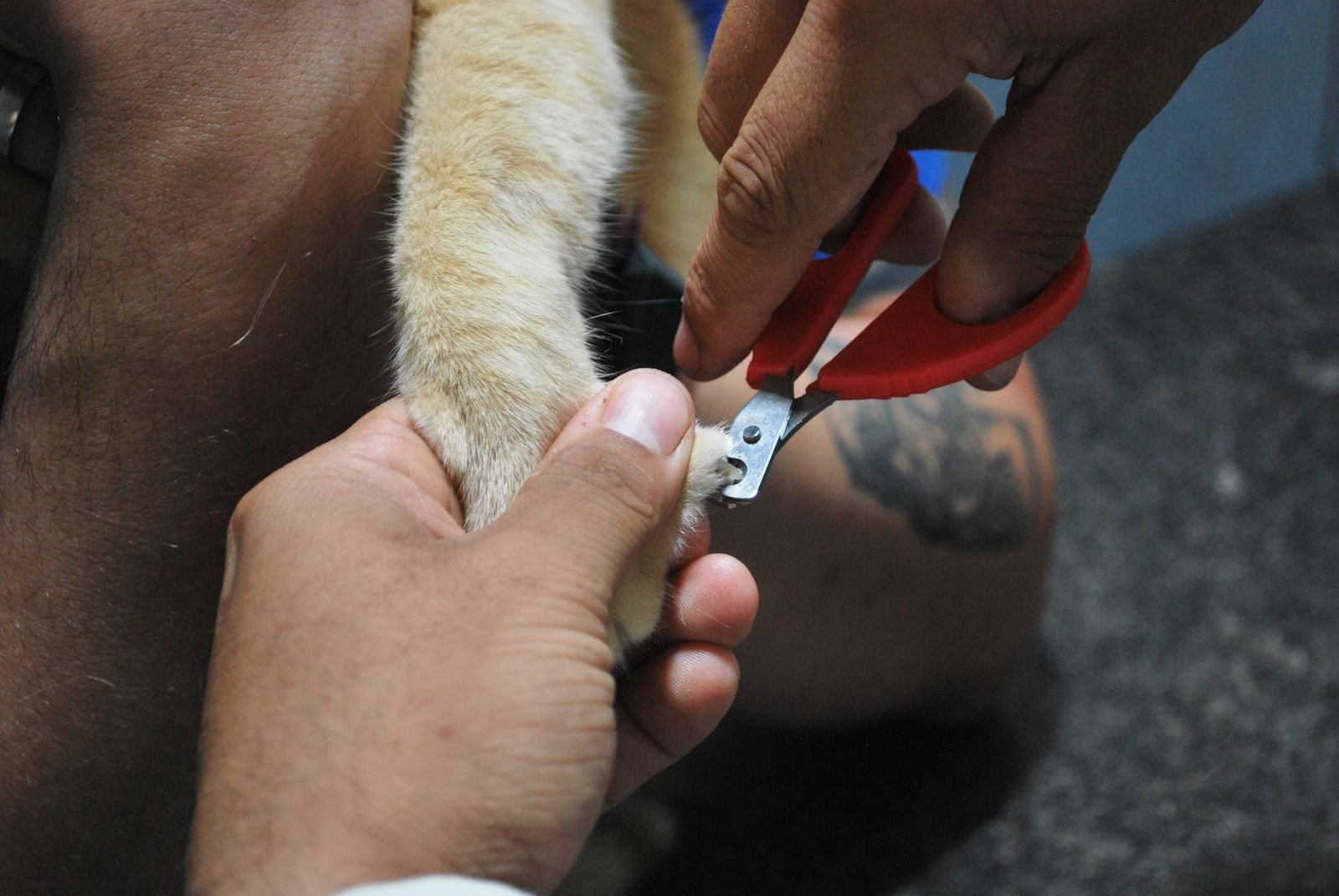
How Often Should You Trim Your Cat’s Nails?
Most indoor cats need their nails trimmed every two to four weeks. Older cats often need more frequent trims because they scratch less and their nails can become thick and overgrown. Outdoor cats may wear their nails down naturally, but they still need regular checks. Look at your cat’s nails weekly to see how quickly they grow.
What You Will Need
- Cat nail clippers, either scissor-style or small guillotine-style
- Styptic powder or plain cornstarch, in case you cut too short
- Treats your cat loves
- A towel, for cats that wriggle
- Good lighting so you can see each nail clearly
Avoid human nail clippers, which can crush or split a cat’s nail. Make sure your clippers are sharp, because blunt blades squeeze the nail and make trimming uncomfortable.
Understand the Anatomy of the Claw
Each claw contains a pink area near the base called the quick, which holds blood vessels and nerves. Cutting into the quick is painful and causes bleeding. In cats with clear or light-colored nails, the quick is easy to see as a pink triangle. Only ever trim the sharp, clear tip that sits beyond the quick. If your cat has dark nails, trim very small amounts at a time.
Step 1: Get Your Cat Used to Having Its Paws Touched
Before you trim, spend several days gently handling your cat’s paws while it is relaxed, such as when it is sleepy or being petted. Touch each paw briefly, then reward with a treat. Gradually hold the paw a little longer each time. This makes the real trim much easier.
Step 2: Choose the Right Moment
Pick a time when your cat is calm, such as after a meal or during a nap. Avoid trimming after an exciting play session or when your cat is already stressed. Sit in a quiet room and settle your cat on your lap, facing away from you.
Step 3: Extend the Claw
Hold a paw gently and press lightly on the top of the toe and the pad underneath. This makes the claw extend so you can see it clearly.
Step 4: Trim Just the Tip
Clip only the sharp, curved tip of the nail, well away from the pink quick. Cut quickly and confidently. It is better to trim a little too little than too much. Release the paw and give a treat.
Step 5: Go at Your Cat’s Pace
You do not have to trim every nail in one session. If your cat becomes restless, stop and try again later. Doing one or two paws a day is perfectly fine. Always finish on a positive note with a treat or play.
Do Not Forget the Dewclaws
Many cats have a dewclaw on the inner side of each front leg, higher up than the other toes. Because it does not touch the ground, it does not wear down naturally and can easily overgrow. Check and trim it at every session. Some cats also have extra toes, so count carefully.
What If You Cut the Quick?
Accidents happen, even to experienced groomers. If you cut the quick, stay calm. Press a pinch of styptic powder or cornstarch onto the nail tip and apply gentle pressure for a minute until the bleeding stops. Give your cat a treat and take a break. If bleeding does not stop after several minutes, contact your veterinarian.
Tips for Difficult Cats
- Use the towel wrap. Gently wrap your cat in a towel, leaving one paw out at a time.
- Ask for help. One person can hold and distract the cat with treats while the other trims.
- Keep sessions very short. Even trimming one nail and stopping is progress.
- Ask a professional. Your veterinarian, a vet nurse, or a groomer can trim your cat’s nails and show you how to do it.
Never punish or forcefully restrain your cat, because this creates fear and makes future trims harder.
Nail Trims and Scratching Posts
Trimming does not replace your cat’s need to scratch. Scratching keeps claws healthy, stretches muscles, and marks territory. Provide sturdy scratching posts and pads around your home. See our guide on why cats scratch furniture for tips. Declawing is a painful surgery that removes part of the toe bones and is banned or discouraged in many countries, so regular trimming and scratching posts are the humane solution.
Final Thoughts
With patience and positive rewards, nail trims can become a calm, quick part of your cat’s routine. Start slowly, trim only the tips, and keep styptic powder nearby. If you are unsure, ask your veterinarian to demonstrate during your cat’s next checkup.
Related reading: Why Cats Scratch Furniture and How to Stop It · How to Trim Your Dog’s Nails Safely at Home · Signs Your Cat Is Stressed
Helpful Resources
- International Cat Care – expert advice on cat health and behaviour
- Cornell Feline Health Center – veterinary information on cat health