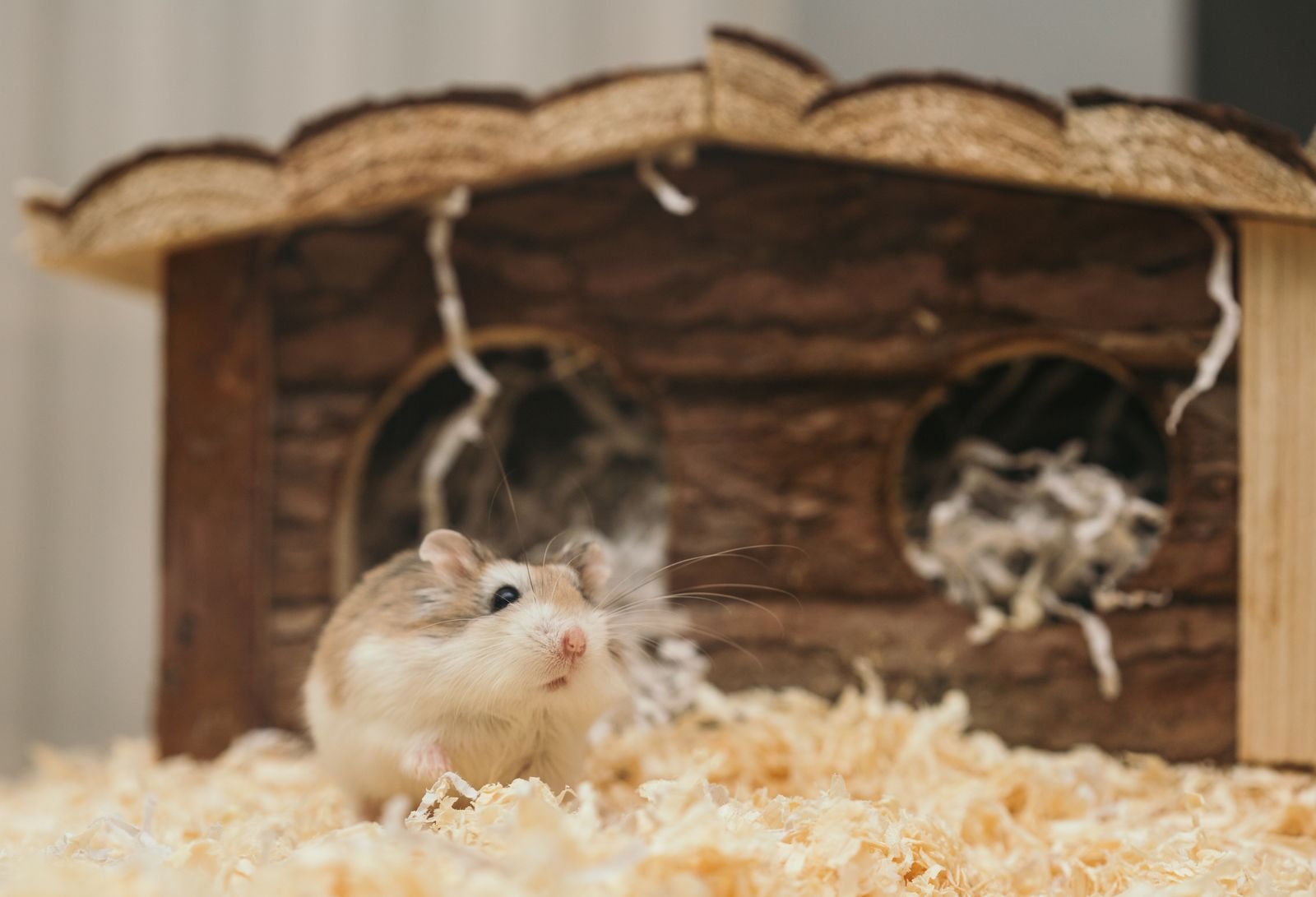
A clean cage is essential for your hamster’s health, but many new owners are surprised to learn that cleaning too often can actually be stressful for hamsters. Hamsters rely on familiar smells to feel safe, and they work hard to build nests and food stores. The goal is to keep the cage hygienic while disturbing your hamster as little as possible. This guide shows you a simple daily and weekly routine that strikes the right balance.
Why Cleaning Matters
Dirty bedding can build up ammonia from urine, which can irritate your hamster’s lungs and eyes. Leftover fresh food can rot and attract bacteria or mold. Regular cleaning prevents odors, reduces the risk of illness, and keeps your hamster comfortable.
What You Need
- Fresh, unscented paper-based or aspen bedding
- A small scoop or spoon
- A safe temporary container, such as a playpen or a secure carrier
- Mild, unscented dish soap and warm water, or a pet-safe cleaner
- Paper towels or clean cloths
- A small brush for corners and accessories
Avoid cedar and pine shavings that are not kiln-dried, scented bedding, and harsh chemical cleaners such as bleach or strong disinfectants unless they are thoroughly rinsed, because hamsters have very sensitive respiratory systems.
Daily Spot Cleaning
Spot cleaning takes only a few minutes and keeps the cage fresh between deeper cleans:
- Remove any uneaten fresh food, such as vegetables or fruit
- Scoop out soiled bedding from the toilet corner, which most hamsters use consistently
- Check the water bottle or bowl and refill with fresh water
- Look over your hamster for any signs of illness
Try to do this in the evening when your hamster is naturally awake.
Weekly Partial Clean
Once a week, do a slightly deeper clean without removing everything:
- Replace the bedding in the toilet area and any damp or dirty areas
- Wash food bowls and the water bottle
- Wipe down wheels, tunnels, and toys that are visibly dirty
- Leave some of the clean, old bedding in place so the cage still smells familiar
- Leave the nest alone unless it is wet or dirty
Many experienced owners keep about a third of the clean bedding each time. This keeps your hamster’s scent in the enclosure and reduces stress.
Deep Clean (Every Few Weeks)
A full deep clean is needed less often, usually every four to six weeks, depending on the cage size and how many hamsters you have. Larger enclosures with deep bedding often need deep cleans less frequently.
1. Move your hamster to a safe, secure temporary space.
2. Remove all bedding and accessories.
3. Wash the base and accessories with warm water and mild unscented soap.
4. Rinse very thoroughly and dry everything completely.
5. Add fresh bedding, then mix in a handful of clean old bedding.
6. Return the accessories to roughly the same places.
7. Put your hamster back and let them explore.
Respect Your Hamster’s Food Store
Hamsters naturally hoard food in a hidden stash. During cleaning, remove only fresh food that could spoil, such as vegetables or fruit. Dry food can usually be left in place. Removing the whole stash can cause stress.
Signs the Cage Needs Cleaning Sooner
- A strong ammonia smell
- Wet or clumped bedding
- Mold or rotting food
- Your hamster sneezing or having watery eyes
If your hamster shows signs of illness, such as sneezing, wet fur around the tail, or lethargy, contact a veterinarian who treats small animals.
Tips for a Cleaner Cage
- Provide a sand bath or a small litter tray with hamster-safe sand in the toilet corner to make spot cleaning easier
- Use a large enough enclosure with deep bedding, as recommended in our guide on how to set up a hamster cage
- Feed fresh foods in small amounts so less goes to waste
A Simple Hamster Cage Cleaning Schedule
Hamsters are clean animals, but they are also very sensitive to sudden changes in their home. A good routine keeps the cage fresh without stressing your hamster by removing all the familiar smells at once.
- Every day: remove uneaten fresh food, check the water bottle is working, and spot-clean the toilet corner.
- Every week: replace soiled bedding, wipe the wheel and toys, and wash the food bowl with warm water.
- Every 4–6 weeks: do a deeper clean of the base and accessories with a pet-safe cleaner, but keep a handful of clean, dry old bedding to mix back in so the cage still smells like home.
- Avoid: strong scented cleaners, bleach that is not rinsed well, and scented or cedar/pine bedding, which can irritate small airways.
- Never disturb the food stash unless it contains fresh food that could go mouldy — hoarding is natural behaviour.
Final Thoughts
A good cleaning routine combines daily spot cleans, a weekly partial clean, and an occasional deep clean. Keep some familiar bedding, leave your hamster’s nest and food store alone when you can, and use only safe, unscented products. Your hamster will stay healthy, comfortable, and stress-free.
Related reading: How to Set Up a Hamster Cage for Beginners · What Can Hamsters Eat? · Best Low-Maintenance Pets for Apartments
Helpful Resources
- RSPCA – Pet care advice – welfare guidance for rabbits, guinea pigs and rodents
- ASPCA – General pet care – care tips for small pets