Dogs feel the heat much more than many owners realize. Unlike people, dogs cannot sweat across their skin. They cool themselves mainly by panting and through small amounts of sweat from their paw pads. On hot, humid days this system can be overwhelmed quickly, and heatstroke can develop in a matter of minutes. These practical tips will help you keep your dog safe, cool, and comfortable when temperatures rise.
Which Dogs Are Most at Risk?
Every dog can overheat, but some are at higher risk:
- Flat-faced (brachycephalic) breeds such as Pugs, French Bulldogs, English Bulldogs, and Boxers
- Puppies and senior dogs
- Overweight dogs
- Dogs with thick or double coats, such as Huskies and Chow Chows
- Dogs with heart, breathing, or other health conditions
- Very active working breeds that do not know when to stop
If your dog falls into one of these groups, take extra care during warm weather.
1. Never Leave Your Dog in a Parked Car
The inside of a car heats up far faster than the air outside, even with the windows slightly open or the car parked in the shade. On a warm day, temperatures inside a car can become dangerous within minutes. Never leave your dog in a car on a warm day, not even for a quick errand.
2. Walk at the Coolest Times of Day
Move walks to early morning or late evening, when temperatures are lower and the ground has had time to cool. On very hot days, a shorter walk or indoor play is the safer choice. Your dog will not suffer from missing one long walk, but it can suffer badly from heatstroke.
3. Check the Pavement
Asphalt, concrete, and sand can become hot enough to burn paw pads. Place the back of your hand on the ground for seven seconds. If it is too hot for you to keep it there, it is too hot for your dog’s paws. Walk on grass or shaded paths instead.
4. Provide Plenty of Fresh Water
Always have clean, cool water available, both at home and on walks. Carry a portable water bottle and bowl when you go out. Adding a few ice cubes to the water bowl can encourage some dogs to drink more. Place several water bowls around the house and refill them often.
5. Offer Shade and Airflow
Make sure your dog always has access to shade, whether indoors or outside. A cool room with a fan or air conditioning is ideal during the hottest part of the day. Trees provide better shade than many outdoor shelters, which can trap heat. Dogs should never be left outside for long periods in hot weather.
6. Use a Cooling Mat or Damp Towel to Lie On
Cooling mats, raised mesh beds, and cool tile floors all help your dog release heat while resting. A damp towel placed on the floor for your dog to lie on can also help. Avoid wrapping a wet towel around your dog, however, because it can trap heat against the body.
7. Try a Paddling Pool
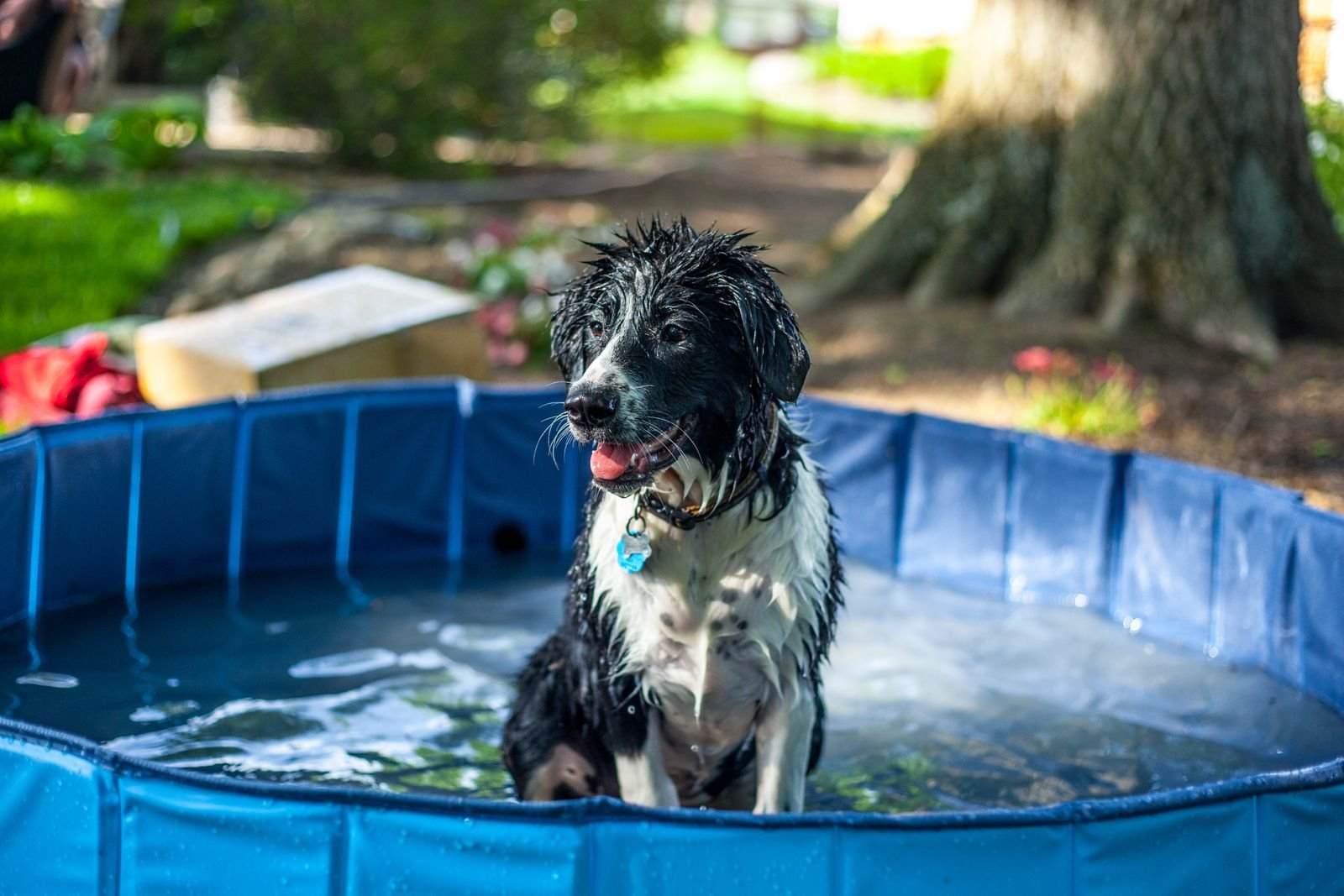
Many dogs love splashing in a shallow paddling pool. Keep the water shallow, place the pool in the shade, and always supervise. Not all dogs enjoy water, so never force a nervous dog to get in.
8. Make Frozen Treats
Frozen treats keep dogs busy and help them cool down. Freeze plain water or low-sodium broth with a few dog-safe pieces such as carrot or blueberries inside. You can also stuff a rubber chew toy with plain yogurt or wet food and freeze it. Avoid ingredients that are toxic to dogs, such as grapes, onion, and anything containing xylitol. Our guide to foods dogs should never eat has the full list.
9. Keep Up with Grooming
Regular brushing removes loose undercoat and allows air to move through the fur. However, do not shave double-coated breeds unless your veterinarian recommends it. Their coat helps insulate them from heat and protects their skin from sunburn.
10. Protect Against Sunburn
Dogs with thin, white, or very short fur, and pink noses or ears, can get sunburned. Ask your veterinarian about a pet-safe sunscreen, and keep these dogs out of direct midday sun.
11. Reduce Intense Exercise
Swap long runs and ball games for calmer activities on hot days. Puzzle feeders, sniffing games, and short training sessions keep your dog’s mind busy without raising body temperature too much.
12. Watch Your Dog Closely
Learn your dog’s normal breathing and energy level so you can spot changes early. If your dog starts panting heavily or slows down, stop, find shade, and offer water.
Signs of Heatstroke in Dogs
Heatstroke is a medical emergency. Watch for:
- Heavy, fast panting and difficulty breathing
- Excessive drooling
- Bright red or pale gums
- Weakness, stumbling, or confusion
- Vomiting or diarrhea
- Collapse or seizures
What to Do If Your Dog Overheats
Move your dog to a shaded, cool area immediately. Cool them with cool (not ice-cold) water, especially over the belly, neck, and legs, and place them in front of a fan if possible. Offer small amounts of water to drink, but do not force it. Then contact your veterinarian or the nearest emergency clinic right away, even if your dog seems to recover, because heatstroke can cause internal damage that is not visible at first.
Final Thoughts
Hot weather does not have to be dangerous for your dog. Plan walks for cooler hours, keep water and shade available, and learn the early signs of overheating. A few simple habits can keep your dog safe and comfortable all summer long. For emergency preparation, see our pet first aid kit checklist.
Related reading: Pet First Aid Kit Checklist · How Often Should You Bathe a Dog? · How to Calm a Dog During Thunderstorms